Some platforms are built like buildings, a fixed structure, a front door, rooms arranged in a planned order. RhizoVerse is built like a root system. Its very name borrows from the rhizome, the philosophical figure of a network without a centre, where any point can connect to any other and meaning grows sideways rather than top-down. That metaphor is not decorative. It shapes how the platform looks, how it teaches, and how it invites participation.
RhizoVerse is an open-access digital platform designed to support intercultural and transcultural competence through the arts. Developed within INTRACOMP, a project funded by the European Union, it brings together interactive tools, virtual and augmented reality environments, AI-driven learning experiences, and gamified encounters into a single creative ecosystem. The goal is ambitious but clear: to make inclusive arts education more dynamic, more collaborative, and accessible far beyond the physical walls of any classroom or studio.
Why a rhizome, and why now?
Conventional intercultural education often treats culture as something to be learned about, a checklist of customs, holidays, or do’s and don’ts. RhizoVerse takes a different stance. Culture, in this framing, is something we do together: through conversation, music, story, play, and shared making. Competence grows not from memorising facts but from sustained, embodied encounter with difference.
That shift matters because the questions facing learners today, about belonging, migration, democratic participation, creative voice, rarely have tidy answers. They demand listening, perspective-taking, and the willingness to revise one’s own assumptions. The rhizome model fits this work: there is no single starting point, no fixed sequence, and no central authority defining what counts as the “right” cultural understanding. Users are invited to wander, to follow curiosity, and to add their own threads to the network.
Six spaces, many entry points
RhizoVerse is organised into several distinct yet interconnected spaces, each offering a different mode of engagement.
RhizoEncounters gathers dramatised dialogues in which characters question and rethink ideas about culture, participation, creativity, and democracy. Some scenes take place in classrooms or rehearsal rooms, others in meetings or everyday situations where people negotiate power, voice, and belonging. The intent is not to deliver conclusions but to model the kinds of conversations that intercultural life actually requires.
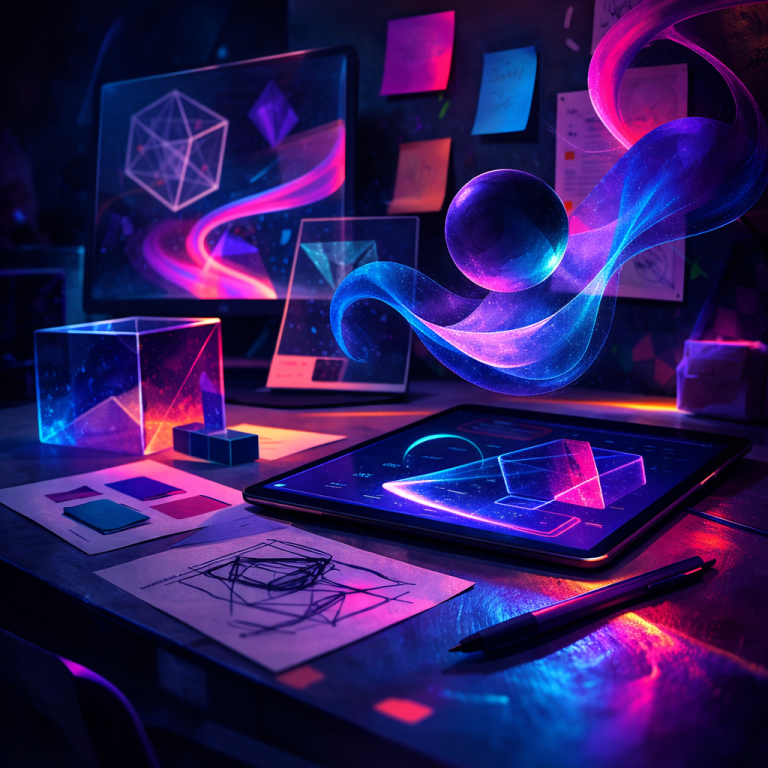
RhizoWorlds is the platform’s experimental studio. Here, artists work openly with digital tools, sketches, drafts, evolving virtual environments, and finished pieces, and visitors get to see creativity as a process rather than a polished product. It is a space for world-building in the literal sense, where new technologies meet artistic practice.
RhizoIdeas functions as a small library of short, lecture-style discussions on the concepts animating the project: creativity, participation, democracy, cultural practice. Crucially, these are offered in Hungarian, Italian, Greek, Czech, Croatian, and English, embedding multilingualism into the platform’s structure rather than treating translation as an afterthought.
RhizoPlay uses games to invite perspective-taking on themes such as cultural difference, communication, and migration. Play is one of the oldest pedagogies for stepping into another’s shoes, and the platform leans into that tradition with digital tools.
RhizoSounds curates music chosen for the experiences and feelings it surfaces, themes of creativity, democracy, and cultural encounter rendered through sound. As the site itself suggests, the journey often begins with listening.
RhizoReflect, still to come, will close the loop by inviting users to contribute their own stories — through text, drawing, or short reflections, so the platform itself grows through the encounters it hosts.
Technology in the service of dialogue
The technical palette behind RhizoVerse is deliberately broad. Virtual reality and augmented reality allow learners to inhabit environments they could not easily access in person. AI-driven elements personalise pathways and support creative experimentation. Gamification translates abstract concepts into experiences that can be played, replayed, and reflected on. Yet the technology is never the point in itself. Each tool is chosen because it expands the kinds of cultural conversations that can happen, across distances, languages, and modes of expression.
This is what distinguishes RhizoVerse from a typical e-learning platform. It is not a course to be completed. It is a living archive of artefacts, dialogues, sounds, and games that users are invited to engage with, remix, and extend. Creative collaboration is the method, not just the goal.
A European project with a global reach
Funded by the European Union under project number 101177351, RhizoVerse emerges from a specifically European concern with intercultural and transcultural competence, but the questions it raises travel well beyond any single region. Wherever people are negotiating identity, voice, and shared creative space, the platform offers tools and provocations.
Perhaps the most quietly radical thing about RhizoVerse is its refusal to tell users where to begin. The homepage states it plainly: each space offers a different path; start anywhere; see where your curiosity leads. In a moment when so much of the digital world funnels attention into predictable patterns, an invitation to wander, and to build worlds alongside others while wandering, feels like its own small act of cultural imagination.
You can explore the platform at rhizoverse.info.